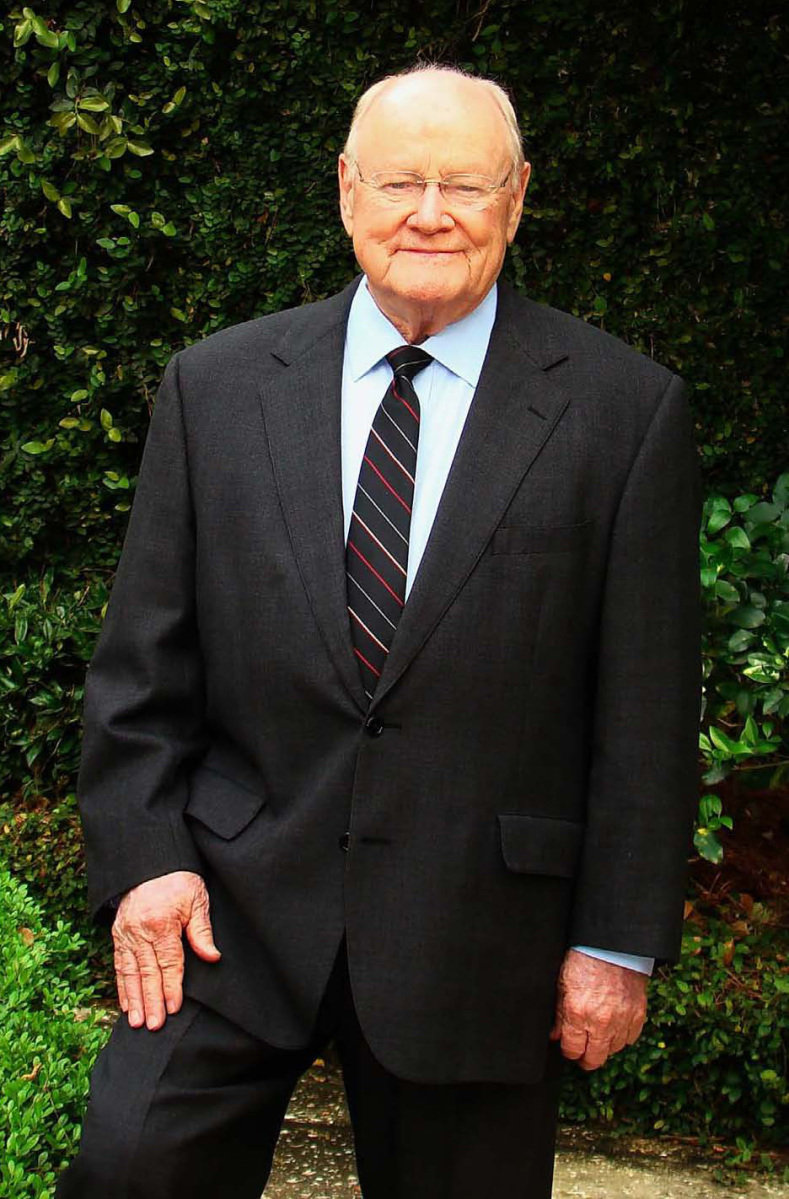
Gene Patterson, shown in Tallahassee in March 2009, died a decade ago, but his life and his writing still offer a lesson for us in 2023.


At a time when our national conversation about race is so brittle and fractured, I find myself longing for a public voice like Eugene C. Patterson’s. Both in person and on the page, that voice — along with his square shoulders, sure-footed gait and startling blue eyes — defined him. It was a voice of courage, compassion, reason, honesty, humility and pragmatism.
It is a voice that remains sorely missed.
Patterson, editor and president of the Times Publishing Co. throughout the 1970s before running it as chairperson and CEO until his retirement in 1988, died a decade ago. He was an innovative editor of the utmost integrity. He was a wise and loyal mentor. And before he joined the Times, he was a champion of civil rights, a major theme in the daily columns he wrote for the Atlanta Constitution in the 1960s. In 1967, he won a Pulitzer Prize for editorial writing.
(I think often of Patterson, a sponsor and friend during my days as an intern, reporter and editor at the then-St. Petersburg Times. Years ago, he endowed the professorship I hold here at Duke University, where he was once a professor and trustee.)
Patterson wrote about race at the height of the Civil Rights Movement. He attacked segregationists like Georgia Gov. Lester Maddox. He marveled at the March on Washington generally and at Martin Luther King Jr.’s “I Have A Dream” speech specifically. And he abhorred the racist violence that so often attended day-to-day life in his beloved home state of Georgia and throughout the South.
“A Negro mother wept in the street Sunday morning in front of a Baptist Church in Birmingham. In her hand she held a shoe, one shoe, from the foot of her dead child,” Patterson famously wrote in a column published on Sept. 16, 1963, the day after a bombing at 16th Street Baptist Church killed four little Black girls as they attended Sunday school.
He continued: “We hold that shoe with her. Every one of us in the White South holds that small shoe in his hand.”
That column tugged Patterson into the national spotlight — Walter Cronkite, CBS News’ legendary anchor, read it on air — but it was an anomaly, as rage rarely burdened his prose. As historian Raymond Arsenault has put it, Patterson “wrote with a light touch and a heavy heart.”
His writing carried the power of restraint and reason. The government needed to advance the rights of Black people (“Negroes” back then) because that was the only fair thing to do in a country that called itself free. Racial equality was not just morally right, Patterson believed. It made common sense.
In 1966, for example, Patterson repeatedly lashed Georgia’s Legislature for refusing to seat Julian Bond, a Black activist elected to the state’s House of Representatives the year before. He disagreed with Bond’s opposition to the Vietnam War, but he thought white legislators’ actions were mean and myopic.
As a result, “Georgia’s progressive efforts are overshadowed and the state is widely stigmatized as a political primitive. … Racial divisions are widened. Confusion of issues is deepened.”
Yet Patterson held deep affection for his fellow Southerners. He believed fear drove their irrational violence: “The Southerner is a stronger, gentler man than his fictions paint him. He knows things in his heart that his tongue denies. He is, in lonely test, a fair, brave and compassionate man. The Southerner is in nearly every way a better man than he presents himself to be.”
Later, Patterson lamented that he was sometimes too soft on the South. Too often, he said, he served up “pale tea.” Still, his embrace of both racial justice and respect for Southerners gave him a moral authority that arguably few other public figures in Georgia could claim.
Walking this tightrope meant that he rejected violence among civil rights protesters, but he applauded peaceful demonstrations. He assailed demagogues, both white and Black. He despised the casual scorn with which police used their clubs and fists, but he praised them when they treated Black people with dignity.
There is a lesson for us in 2023. Today, racial tensions shadow an array of issues — affirmative action in universities, so-called “woke” culture, immigration and police misconduct, among others. But Patterson’s clear-eyed stances, combined with his empathy, offer us a model for public discourse.
He believed in Black people, and he believed in the South. And he never doubted that both loved this country. He, too, loved America, treasuring its ideals even as he longed for its redemption.
Patterson held on to both hope and truth at a time when Americans desperately needed both. In our own era of anger and despair, his voice echoes still.
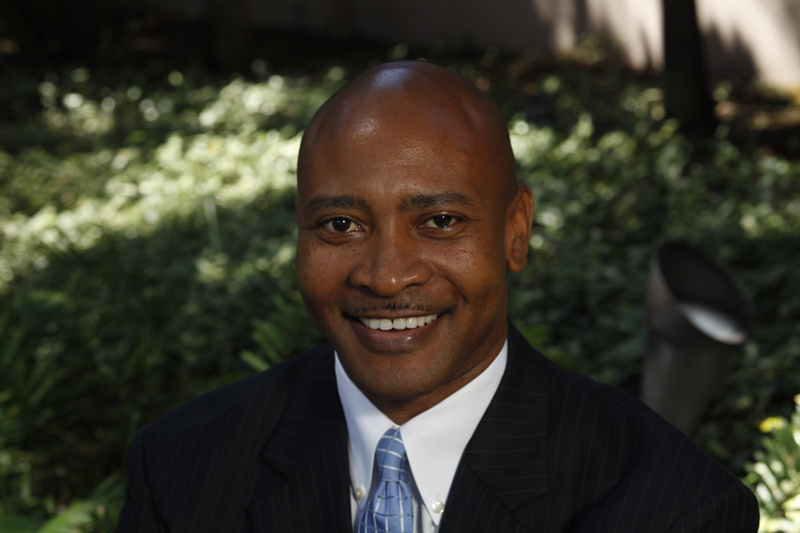
Stephen Buckley is the Eugene C. Patterson Professor of Journalism and Public Policy Studies at Duke University. He is a former managing editor of the Times and former dean of faculty at The Poynter Institute.