


A recent New York Times editorial praised the nationwide decline in murders, citing the 20% reduction in the first half of 2025. That progress is significant and deserves recognition. Yet Tampa’s story goes further. With a 63% drop in murders during the same period, Tampa demonstrates that crime reduction is not simply the by-product of social forces but the direct result of deliberate strategies, accountability and innovation.
World-renowned former New York Police Department Commissioner Bill Bratton, in his memoir, “The Profession,” outlined these very principles. He emphasized “precision policing” and data-driven systems such as CompStat as essential to reducing crime and transforming police culture. Tampa’s approach — through its Focus on Four, the Violent Impact Player (VIP) program, and the Crime Gun Intelligence Center (CGIC) — echoes Bratton’s philosophy that proactive, intelligent policing is both effective and indispensable.
In the early 2000s, Tampa faced rising crime and declining trust. The department responded with its Focus on Four plan, targeting burglary, robbery, auto burglary, and auto theft, offenses closely tied to violence. Guided by the Focus on Four principles — intelligence-led policing, data-driven resource allocation, proactive enforcement and neighborhood engagement — the city achieved nearly an 80% crime reduction over two decades. Confidence was restored both inside the department and across communities.
The New York Times editorial rightly emphasized public trust and the importance of law enforcement as key factors behind falling crime. Both are critical, but Tampa’s results show they are only part of the equation. Tampa’s Focus on Four principles place direct responsibility for crime reduction and accountability on police agencies themselves.
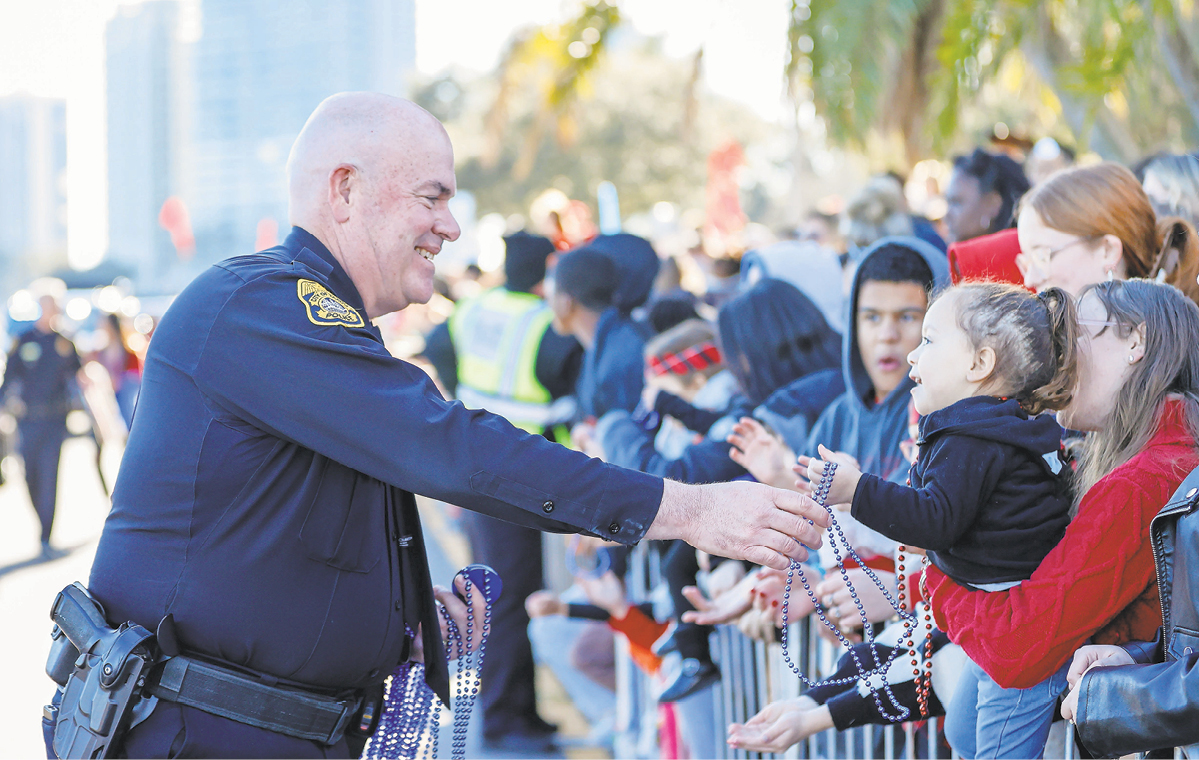
Community-oriented policing is the cornerstone. A study by researchers at the University of South Florida and Indiana University-Purdue University Indianapolis identified community policing as a proven concept, reducing crime and disorder by 10% while increasing citizen satisfaction by 37%. In Tampa, this principle is not just a philosophy but a daily practice. The expansion of our Police Athletic League, which offers safe alternatives for youths, is just one example.
The Violent Impact Player program exemplifies precision policing. Commanders know high-risk offenders by name, risk and routine. Analysts map networks while officers, detectives and prosecutors coordinate targeted responses. An independent evaluation by George Mason University validated the program, finding a 24% reduction in violent crime, a 24% decline in gun crime and more than 250 victimizations prevented, all while lowering arrests, underscoring both efficiency and fairness.
To sustain progress, Tampa has layered in additional strategies:
• Crime Gun Intelligence Center: leveraging technology from the Bureau of Alcohol, Tobacco, Firearms and Explosives to quickly link shootings and identify repeat offenders.
• Technological advancements: using drones, virtual reality training and artificial intelligence tools to improve efficiency and prevention.
• Focused deterrence: offering both alternatives and consequences for violent groups, supported by a $1.5 million Community Violence Intervention grant and partnerships with Safe and Sound.
• Public safety partnership: bringing Department of Justice resources and expertise to reinforce local strategies.
At the heart of Tampa’s success is shared responsibility. Federal, state and local agencies work alongside our police department, community leaders, clergy and residents. This collaboration ensures that prevention, enforcement and engagement move together toward a common goal.
The New York Times was right to spotlight the national decline in crime. But Tampa’s results far surpass that benchmark. The murder rate here in the first half of 2025 was two per 100,000 residents, ranking Tampa among the safest major cities of its size in the nation. That distinction was not earned by chance or shifting social tides; it was earned by strategy, accountability and evidence-based policing.
Strong leadership and reform make crime prevention central to policing. Tampa’s experience is a modern reflection of that truth. Social stability and trust matter, but they tell only part of the story. Highly engaged officers — guided by intelligence, innovation, technology and partnerships — can decisively shape outcomes.
Tampa has not only built a safer city; it has provided the nation with a replicable blueprint, one that proves public safety is never an accident. It is the result of strategy, leadership and commitment.
Lee Bercaw is Tampa’s police chief.