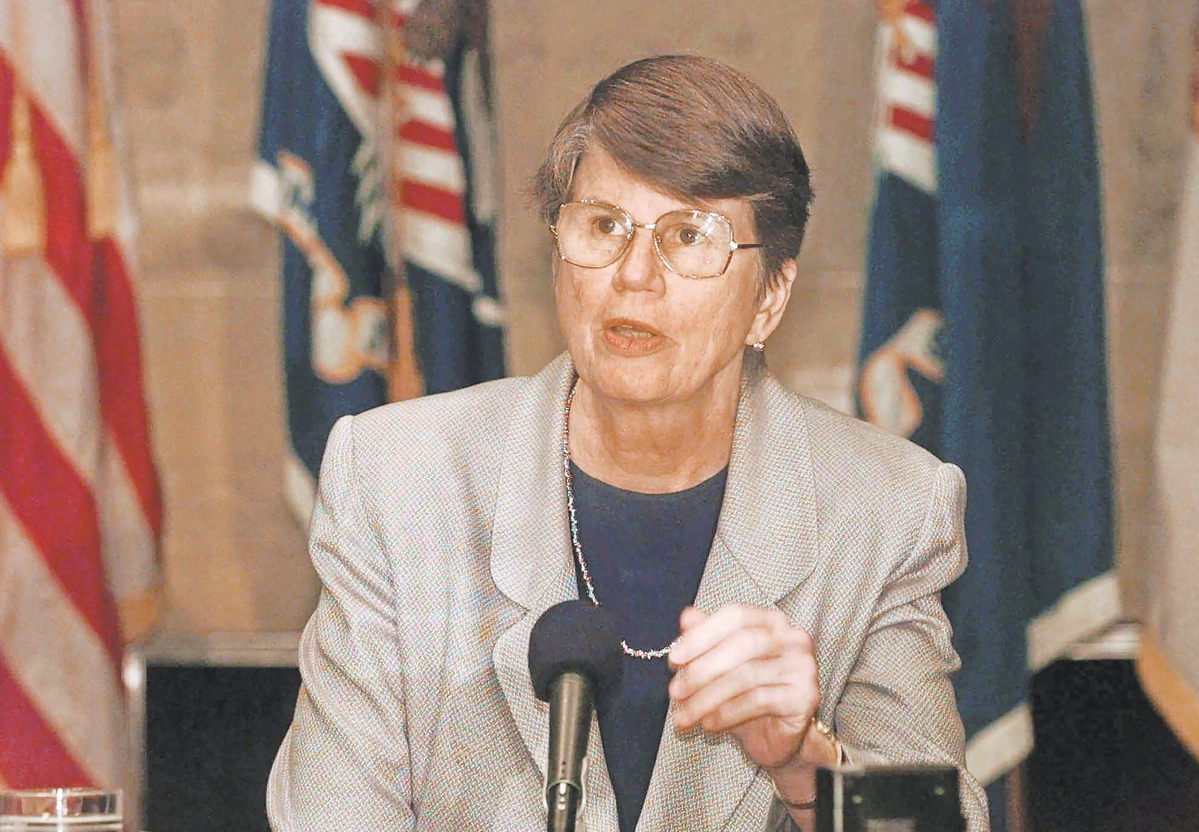
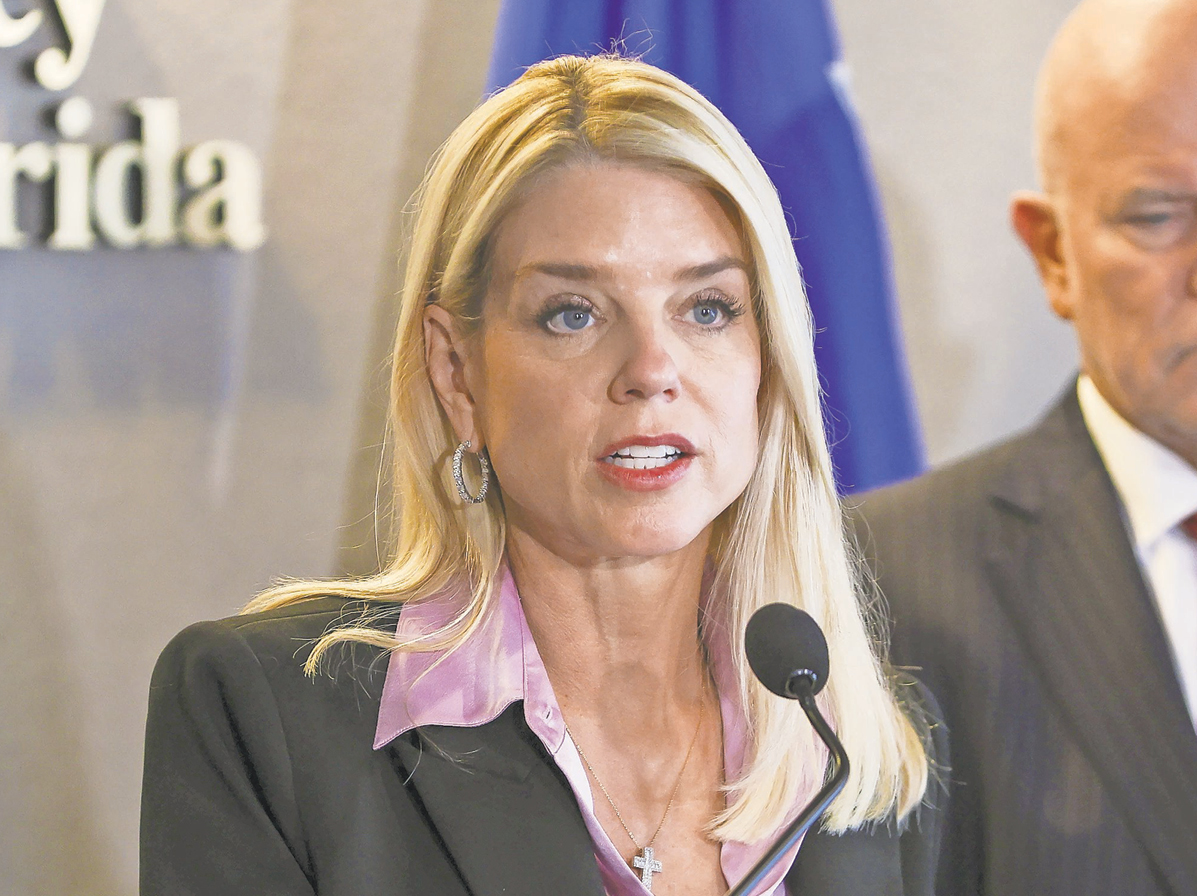


Two women from Florida have served as U.S. attorney general. Both were born here, both were hometown prosecutors and both were firsts in their field. The similarities end there.
I was reminded of the contrast between Pam Bondi and Janet Reno the other day as Bondi appeared before the Senate Judiciary Committee. Committee Democrats have accused Bondi of weaponizing the Justice Department. It is a fair charge — something Donald Trump, the Republican president who appointed her, specifically asked Bondi to do — and the attorney general should have addressed it at the hearing. Instead, she stonewalled and insulted Democratic senators.
Bondi, 59, is a former Hillsborough County prosecutor and the first woman elected as Florida attorney general. She was an adviser to the White House during Trump’s first impeachment proceeding and also served as a campaign surrogate. The U.S. Senate confirmed Bondi as attorney general by a vote of 54-46 in February. Since then, her department has brought criminal charges against several of Trump’s perceived political enemies, including the former FBI director and New York’s attorney general. It also has reportedly purged dozens of employees who worked on Trump-related investigations. There’s more; just Google it.
Miami native Janet Reno came to the office in a very different way. Dade County’s first female state attorney was not part of Bill Clinton’s 1992 presidential campaign. After the election, Clinton confidant Leon Panetta called Tampa Mayor Sandy Freedman, the first big-city mayor to endorse the Arkansas governor for president. What can you tell us about Janet Reno?
“I didn’t know her really well,” Freedman recalled Tuesday. “But I told him, ‘She’s going to be independent, her own person, and she’s always going to do what’s right no matter who tells her what to do.’”
Reno packed a single dress from Saks, and Clinton’s team spirited her secretly to Washington. After two days of vetting, Clinton’s lawyer phoned the president: “I think I’ve got a live one.” Shuffled into the White House after dark, Reno met Clinton for the first time. The president summoned her back days later, elbowing her in the Oval Office and offering three words of advice: “Don’t blow it.”
The U.S. Senate confirmed Reno in March 1993 by a vote of 98-0, making her America’s first female attorney general.
The celebratory moment didn’t last long. Reno entered office as the FBI’s standoff with a radical Christian sect in Waco, Texas, had entered its second week. As conditions deteriorated into a second month, Reno approved a final assault on the compound, which resulted in a fire and the deaths of more than 70 people. “I approved the plan, and I am responsible,” Reno said afterward, calling it “the toughest decision I have ever made.”
Other tough decisions generated flak from both the right and left. Reno authorized the expansion of an independent probe into a Clinton land deal, leading to the discovery of Clinton’s affair with a White House intern, which culminated in the president’s impeachment. She ordered a 6-year-old Cuban boy found floating off Florida’s coast to be returned to his father on the communist island, enraging conservatives in South Florida’s Cuban-American community in a move some Democrats complained cost former Vice President Al Gore the presidency in 2000.
More broadly, Reno opened the Justice Department to greater public scrutiny, reflecting her sense that government must be accountable. In one of her earliest official acts, Reno rescinded a decade-old rule and declared that “a presumption of disclosure” would apply to any public request for government records. Reno’s father wrote for the Miami Herald; her mother, for the Miami News.
“How can I mind the press?,” she asked CNN’s Larry King during a 1993 interview. “My father was a reporter. My mother was a reporter. My grandfather was the chief photographer for the Herald.”
“My general feeling is that there’s never too much press attention,” she said, “because you need a free press to have a free society.”
Reno served as attorney general for the entirety of Clinton’s two terms, longer than anyone in that position for the previous 150 years. She died in Miami on Nov. 7, 2016, at the age of 78.
Bondi’s record as attorney general is not yet complete. This week, the New York Times reported that Trump is demanding that the Justice Department pay him about $230 million in compensation for the federal investigations into him, and that settlement might ultimately be approved by senior department officials who defended the president or his allies.
Let’s see how Bondi reacts. I can guess how Reno would have responded.
Contact John Hill at hill@tampabay.com.